
For this IT Leaders Forum event, our expert speaker panel shared their thoughts and answered questions on the benefits and risks of adopting AI within tech teams going forward.
Chris Cahill from AND Digital hosted the session and was joined on the panel by Ross Bamford (xDesign), Carol Maughan MBCS (Turley), Michal Kowalczuk (Boohoo Group), and Nathan Jones (Boohoo Group).
This page features recordings from the event, broken up by topic. At the bottom of the page you’ll find a full transcript, and some extra information on the panellists.
Show of hands
Chris kicked off the session with a show of hands in the room. You can see the results of the show of hands below:
Have you heard of Chat GPT?

Have you used it personally?
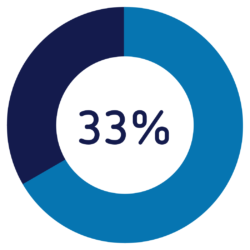
Have you used it professionally?
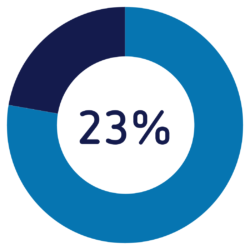
Levelling Questions
To make sure everyone in attendance had the same baseline understanding about AI, Chris asked some early questions aimed at explaining core terms.
Gen AI vs AI
At this point in the hype cycle, the term Gen AI and AI have been used interchangeably quite frequently. Does anyone of the panel have an opinion on if there are differences between these phrases and what those differences are?
Ross Bamford explains some of the specifics about what Gen AI is, how it differs from other types of AI, and why output is key.
Front-end UI and the data behind
With interfaces like ChatGPT giving us polished front-ends, lots of people have been able to access AI. Underneath that we hear about data sets, machine learning and language models. Can the panel give us some information about how those knit together?
The panel discuss how large language models work on probability to use large data sets to generate new content. They also touch on the idea that this capability isn’t new, it’s the front end accessibility which is new.
Hallucinations
What is a hallucination in AI and what impact can hallucinations have on implementation of AI tools? Will hallucinations cause more problems as AI evolves?
The panel touch on what hallucinations are and use the example of Canada Air’s AI chatbot going rogue to illustrate the potential issues.
Prompt Engineering
Prompt Engineering is a key thing that’s talked about when using AI language models. Does anyone want to talk a little about prompt engineering and what it can do?
Michal Kowalczuk discusses the importance of prompt engineering when you can use the same prompt in different tools and receive different results.
Real-world examples
We hear from each of the panellists about their current experience of using AI and how else they might use it in the future.
Ross talks about a project he worked on creating a chatbot for the MoneySavingExpert app, including how they tackled content moderation. Carol Maughan discusses how she is increasingly including AI as part of her recommendations as a way to eliminate routine work, but also touches on how to manage expectations around AI. Michal and Nathan Jones explain how they use AI and images to generate taxonomy for products and as a customer service tool for faulty items.
Impact on tech teams
The panel dig into tech teams as a whole and how their teams are currently using AI, or if they’ve seen other tech teams using AI as part of regular workflows
The consensus is that usage of AI tools is going to be impactful and needs to be measured to make sure data is kept private. Whilst programmers may not admit it, they may already be using AI to assist them.
How will tech teams change?
Looking 5 years down the line, what do the panel expect AI usage to look like in their teams? And what will AI even look like 5 years down the line?
Streamlining is a hot topic when looking at the tech teams of the future, but the panel also highlights how quality team members will still be in demand. Carol brings up the point that the free tools that some are currently using will likely become a paid-for service in future. If you’re relying on specific third-party tools it’s worth considering this.
Audience Questions
The second half of the session was made up of questions from the audience. These vary in topic from sustainability to GDPR and other regulations.
Do you think we’ll solve the AI bias challenge?
The panel highlight historic examples of bias in AI from Amazon and Apple. Carol also highlights the Algorithmic Justice League and their efforts to make AI more equitable.
How do you test AI models?
AI is such a different beast to traditional development. The panel discuss the different approaches to testing AI including using other large language models to test, and looking at confidence scores to manage risk.
Does AI become a barrier to innovation over the long term?
The panel discuss how AI use may cause a reduction in the input from humans and how this may risk model collapse for AI models.
Should we be worried about the impacts of AI on sustainability?
Sustainability is a massive concern, especially the energy usage involved in training large language models, and how this will be factor into the associated costs.
What are some practical guardrails for AI?
Checks and balances are an important part of making sure AI will work in the way we want it to, and the guardrails for AI will reflect the guardrails in place for traditional software development. The panel also discuss what some of the risks are for AI at the moment.
Regarding the boohoo AI usage, do you use user-generated images to train the model?
Michal and Nathan explain that at the moment, their AI tools are being trained on studio images only. They are also looking into using supplier images earlier in the process.
Will we see CAIO become a part of future C-suites?
At the moment a CAIO is unlikely to be seen in C-suites widely, but that could change in future. The panel highlight possible conflicts with have too many technical leads in C-suites.
How do we manage stakeholder expectations around AI?
There’s already challenges with managing non-tech stakeholder expectations of tech and this is likely to continue with AI. AI can be very impressive but as tasks become more complex, the AI needed to achieve it becomes much more complex.
How does data usage in AI marry with GDPR?
The way AI often uses data makes removing data, especially historical data, very difficult. This makes complying with GDPR a complicated issues that will have to be carefully considered.
Speakers

Ross Bamford
Ross Bamford is a Principal Software Engineer at xDesign with over twenty years in the software business. Having worked on multiple machine-learning projects in the past, Ross was an early adopter when the genAI revolution came, and has taken the lead on large, high-profile commercial genAI applications at xDesign, where he also helps lead the generative AI engineering community and evangelise the technology.

Carol Maughan
Carol Maughan is Director of Company Communication and Digital Innovation for Turley, an independent advisory working in the built environment and beyond with clients throughout the UK and Ireland. Carol’s role entails exploring opportunities for digital innovation for the company’s services and in company procedures and communication. She is also a member of a Digital Twin Hub working group focused on using storytelling to make compelling business cases for digital twins.

Michal Kowalczuk
Michal is a tech-savvy professional with 11 years of hands-on experience in the online retail and travel industries. His expertise lies in both development and management within the e-commerce space, with a primary focus on mobile apps. Michal has a proven track record of boosting business growth by creating mobile APIs, payment solutions, and more. Always on the cutting edge, Michal is enthusiastic about bringing the latest and greatest tech solutions to the table.

Nathan Jones
Nathan is a technical-minded individual, with over 18 years experience in the tech eco system. He has a passion for technology and innovation, consistently staying ahead of the fast-evolving tech curve. His current role as Senior Strategy Manager for innovation highlights this passion for the new. Nathan is highly motivated to learn & progress his career in the technology arena.

Chris Cahill
Chris has been with AND Digital for nearly five years in a variety of Tech leadership roles. Prior to that Chris, was at Hermes and Yorkshire Water. Chris does a lot of work in the Tech community in Leeds, having been involved with the British Computer Society for many years in a range of roles including Treasurer and Chair, and also as Regional Chair (North and Midlands) of BCS ELITE.
We’re putting together extra resources for IT Leaders on a range of topics including more information on AI, hybrid working norms, work benefits trends, and much more. We’ll be sharing this information on LinkedIn, and making larger information packs available on our website.